
BOOK REVIEW: Intelligent Farming
Regenerative Change, How to and Why You Should
By Tim Parton | Reviewed by Emma Victor-Smith, Future Food Movement
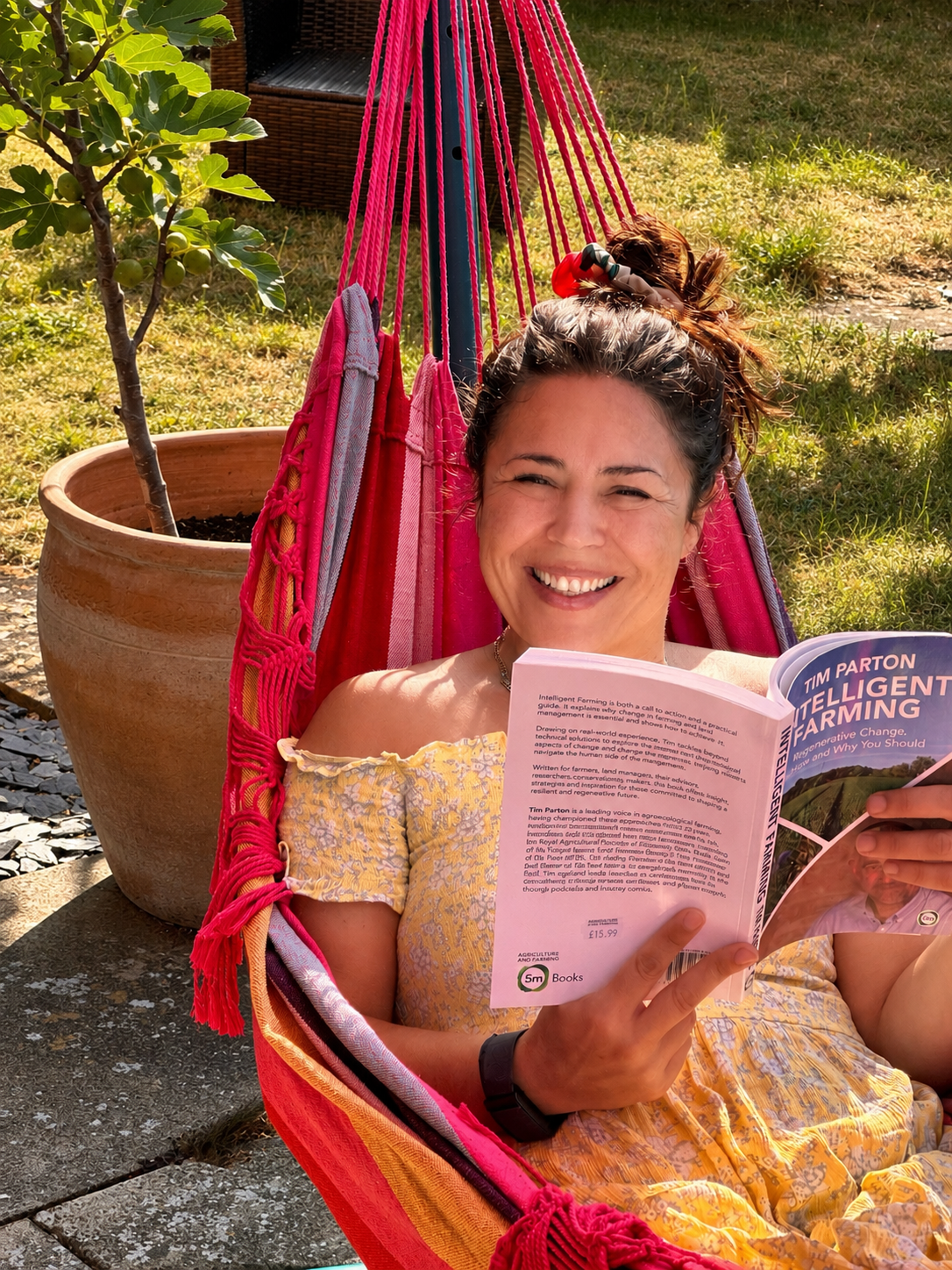
If you sit anywhere near sourcing, agronomy, ESG or supply chain risk, Tim’s new book is one to keep on your desk.
Tim Parton has been Farm Manager at Brewood Park Farm in Staffordshire since 2003. Over two decades he turned a 300-hectare conventional arable operation into a working demonstration that cutting synthetic inputs and cutting costs can be the same decision. He was named Arable Farmer of the Year at the British Farming Awards in 2019 and Farm Innovator of the Year in 2020, and he co-founded the Green Farm Collective. Members of the Future Food Movement community will already know Tim as one of the farmers on our Farmer-Led Working Group, and from his session at our February event on nutrition and health.
What's in the book
Tim walks through the biological mechanics most food businesses never see past the supplier relationship: the rhizophagy cycle, mycorrhizal networks, the bacteria and fungi that do the job synthetic nitrogen and phosphate are currently paid to replace. It's dense in places and it doesn't pretend otherwise. But the detail is the point, he backs almost every claim with a number from his own farm: a 40kg/ha reduction in applied nitrogen that funded the microbial brewing programme that replaced it, worm counts that rose from 18 to 37 per square forkful over six years of measurement, soil oxygen content at 79.2%, near double the industry baseline he started from.
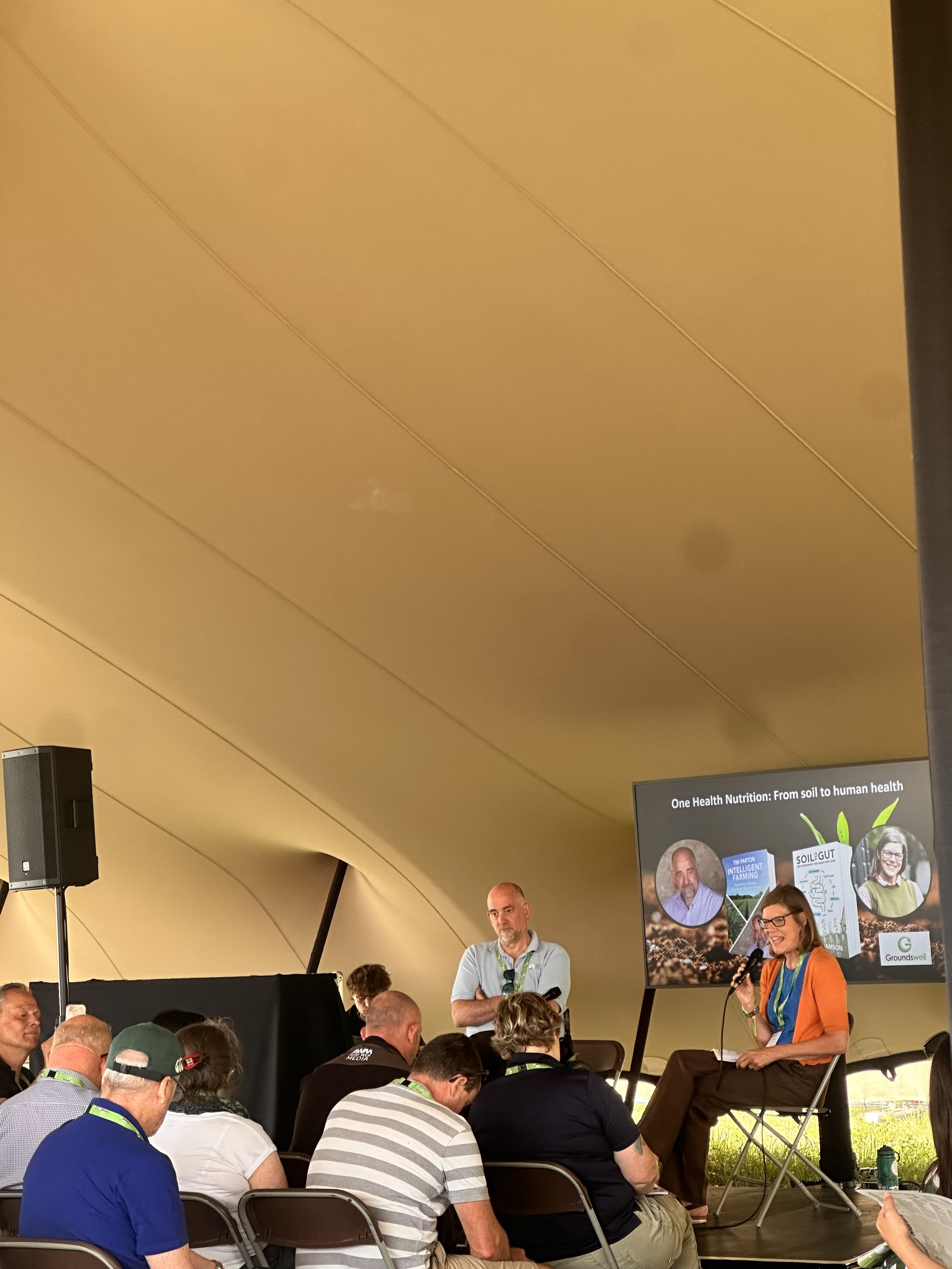
Tim Parton & Lucy Williamson on soil health & gut health
He's also candid about what didn't work, what it cost him socially to change systems while his peers told him he'd be bankrupt, and how long it actually took to see a return. That's the part worth reading for anyone assessing a supplier's regenerative transition plan: the timeline is years, not seasons, and the credible version of this story includes the failures.
There's a full chapter on testing and monitoring: worm counts, slake tests, infiltration rings, off-farm biological and nutrient analysis. It reads less like sustainability reporting and more like a due diligence checklist.
Why it matters now
Strip away the soil-health language and this is a book about input cost volatility and yield resilience under a farmer who kept a full paper trail. For anyone in procurement or supply chain trying to work out whether a "regenerative" claim from a grower is real, Parton's book gives you the actual metrics to ask for, worm counts, organic matter percentage, nitrogen reduction against a baseline, rather than the marketing language that usually stands in for them.
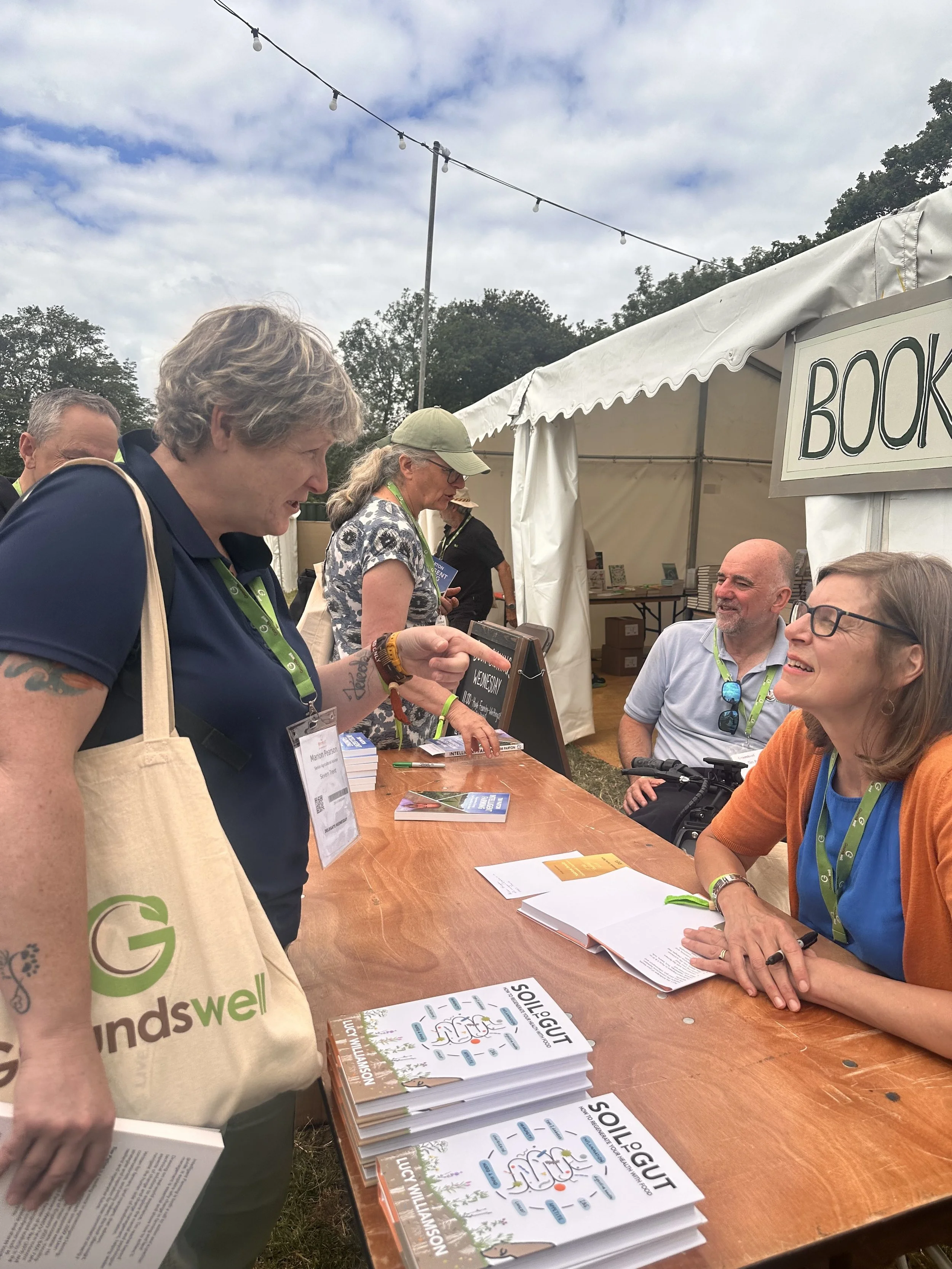
Tim Parton & Lucy Williamson book signing at Groundswell 2026
This is the same argument Tim made at our February members' event on health. He pointed to testing on crops grown decades ago showing nutrient density roughly halved against what's produced now, and drew a direct line between that decline and the same period's rise in synthetic fertiliser and pesticide use. His point to the room wasn't a sustainability pitch, it was that an undisturbed, fungally-active soil gives a plant access to nutrition a purely synthetic input programme can't replicate, and that's what shows up later in the food. He also flagged that UK household spend on food has fallen from around 40% in the 1950s to roughly 7 to 8% today, a comparison worth sitting with if you're weighing where nutrient density fits against price in your own range.
It's also a useful corrective for teams still framing this conversation around climate commitments. Tim’s case for change is that the old system stopped paying for itself: rising fungicide passes, flat yields, escalating costs.
Practical takeaways for members working in partnership with their farmers:
A shared set of on-farm and off-farm tests, worm counts, slake tests, biological soil tests, you can agree to track together rather than impose
A real cost-reduction case study that gives both sides a benchmark to work from
A realistic transition timeline, so expectations on either side of the relationship are set honestly from the start
Advocate for regenerative farming to your board and colleagues (take them to Groundswell next year)
A working definition of "regenerative" measured in numbers, that farmer and buyer can both use.
Tim co-founded the Green Farm Collective, the farmer-owned network he co-founded to bring exactly this kind of evidence-led produce to market.
Intelligent Farming, Regenerative Change is published by 5m Books: Amazon link