
Braver, Bolder, Broader, Better. Why Plan B might actually be what moves us towards a healthy, sustainable future in 2026
Siân Wynn-Jones reflects on Sustainable Foods 2026.
Sustainable Foods 2026 has given the food industry clear signals on the important conversations for the year ahead. It didn’t hold back on the big names from industry and civil society in its keynotes, panels, and fireside chats, and I was pleased I’d carved out the full two days in my week to dive into the side conversations and networking opportunities, where the subjects came to life and insights emerged.
Climate pressure, health challenges and economic volatility are shaping day-to-day decisions across farming, manufacturing, retail and policy. If the main stage sometimes focused on one area over another, the audience's Slido questions and conversations in the exhibition hall highlighted how the knotty challenges connect and competing priorities influence each other.
Turning information into insight and then action is where true value lies (and is created!). Business as usual, with a smattering of sustainability ‘good’ around the edges, isn’t just hurting other people/businesses/parts of the world. We can say, “it failed”. But we [and our predecessors] built ‘it’. The free-range chickens are home to roost. Luckily, (and acknowledging everyone who took time to speak with me – thank you), my reflections on Sustainable Foods 2026 revealed a Plan B.
Plan B for 2026
Be braver: step beyond safe commitments
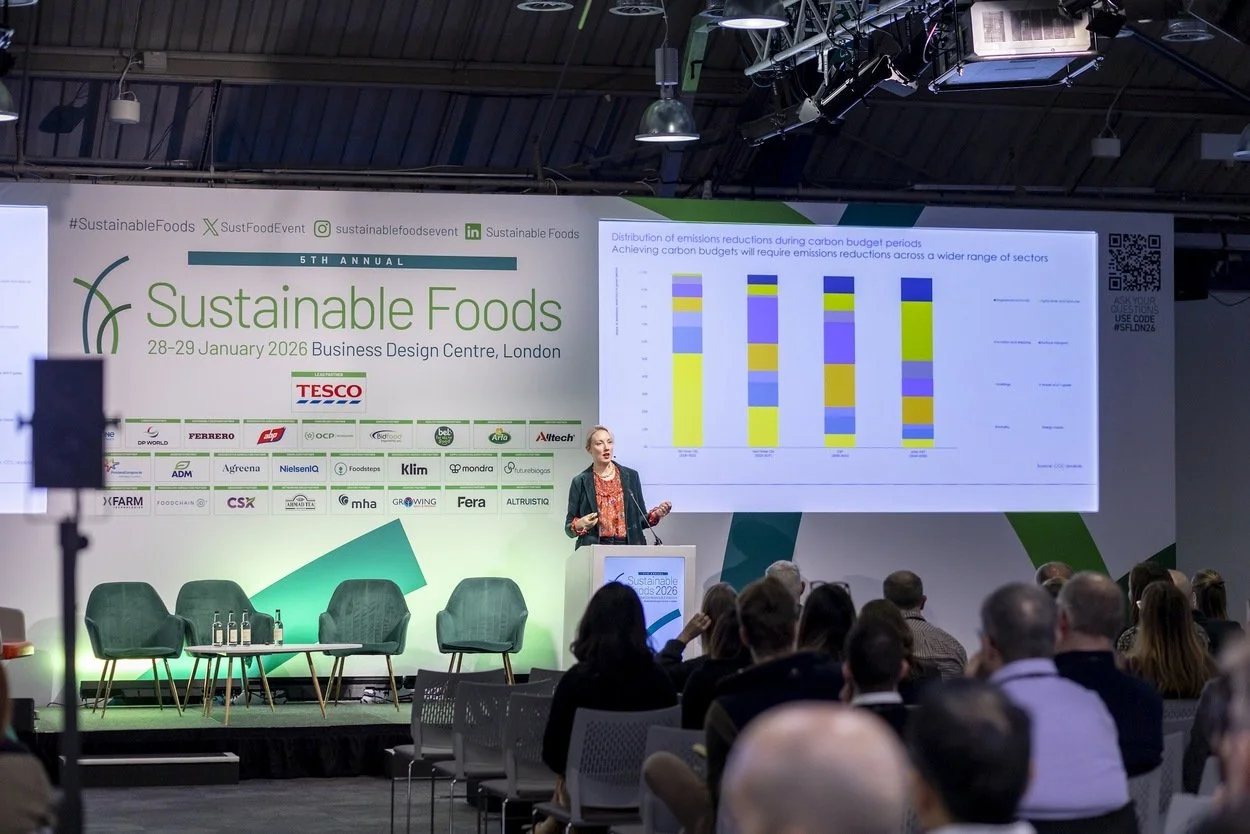
Whether it’s net zero, nutrition targets or remuneration-linked KPIs, we can’t afford to let the comfort of safe commitments keep us from accelerating the pace of change. Several times, we heard, “What got us here, won’t get us where we need to go.” The increased proportion of responsibility for emissions by land and agriculture brought this starkly into focus in Climate Change Committee CEO Emma Pinchbeck’s introduction to the third climate budget.
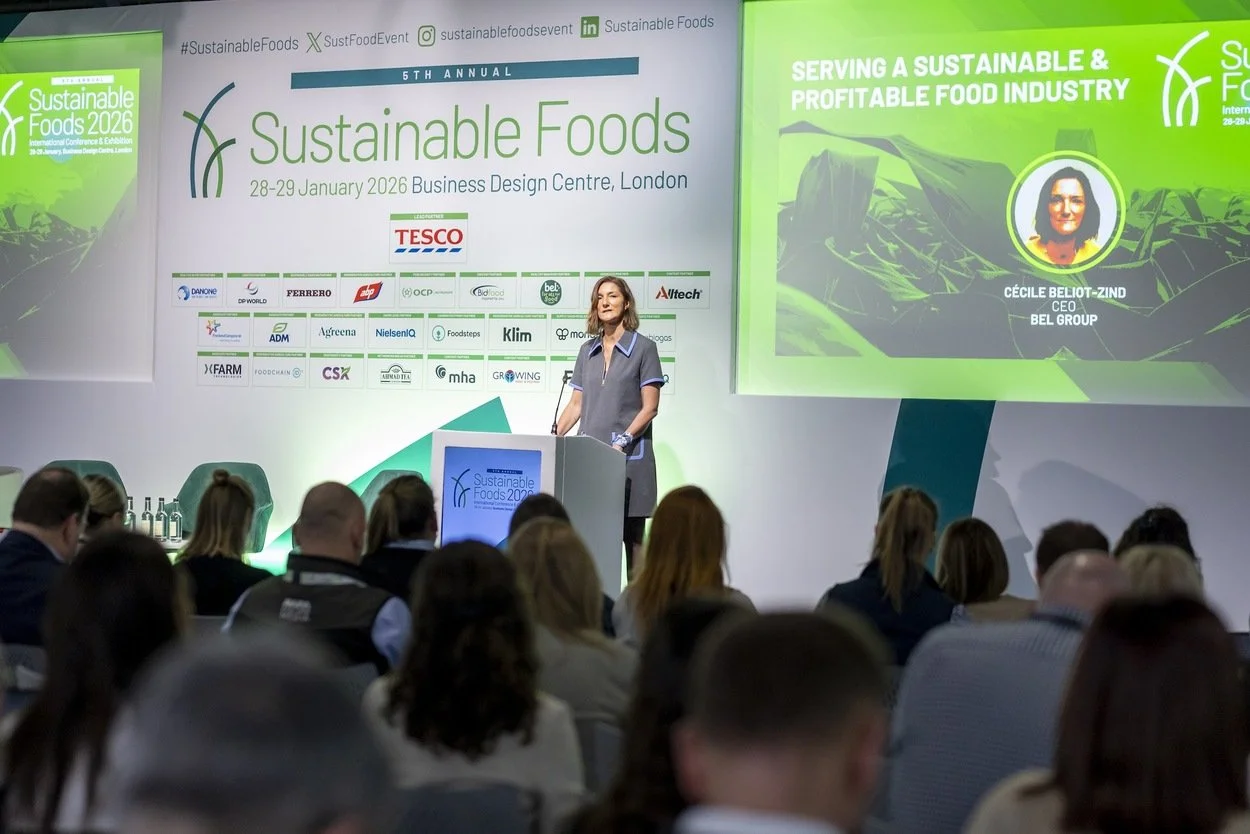
We need leaders who show us a well-lit path, rather than describe the dark mess we find ourselves in. We need leaders to advocate for changes to build a food system that is better for all, even if those first steps are uncomfortable. We need more pilots and shared learnings (not just shared success stories). Bravery means acknowledging what isn’t working and having the courage to do things differently. Do we need snacking to be sexy, as Bel Group CEO Cécile suggested? I don’t know, but the comment caught people’s attention and challenged the perceived role of snacks in healthy nutrition.
Be bolder: act with transparency and accountability
Ambition without accountability risks being symbolic. Too many targets exist on paper, with little clarity or comparability on actual progress.
ESG metrics are not as mature as financial ones, and we need to ensure lessons are learned and that comparability can happen. Risk management disclosures and resilience conversations clearly demonstrate the impact of ESG issues across food businesses (and on the bottom line).
We need leaders confident enough to share decisions, setbacks and successes openly. Boldness isn’t about perfection; it’s about demonstrating the work, inviting the learning and owning responsibility.
But it’s also true that curling up with a hot beverage and delving into a TCFD report isn’t every consumer’s cup of tea. What can we do collectively and individually to improve food literacy in the food environments where we operate?
Be broader: widen participation and perspectives
We need to break out of our silos, both in terms of the people we speak with and the subjects we speak about. Everything is connected, and we need to wholly embrace systems thinking whilst being mindful of where the food system interconnects with others (health systems, built environments, regulatory processes, etc.).
Representation is primarily about being intentional and inclusive (something we at Future Food Movement are unashamedly focused on). Too often, people stay in their comfort zone and fail to seek out the perspectives they are missing.
We heard some great examples of pre-competitive collaborations, but we need to hear more. Take a little time to map out the food system from your perspective, identify areas you don’t interact with and work out how to broaden your circle.
Be better: turn information into actionable insight
There is no shortage of data, reports or press release statements, but real insight is tougher and rarer. Understanding the information that matters, what this means to different groups within the food system and how to identify action levers, unintended consequences, learnings and the cost of inaction is a winning combination. And importantly, it’s not a remit for anyone alone.
Real change happens when people understand where they have influence and what actions will make a difference. We need every decision-maker in food businesses to have the confidence AND capability to make informed decisions that can take us to a healthy and sustainable future for all.
My takeaway from Sustainable Foods 2026 is a Plan B: to be Braver, Bolder, Broader, Better. And to support Future Food Movement members and others I work with to step up, speak out, include more voices and act with accountability. The future of food won’t be shaped by ideas alone, but by the people willing to act on them.
Siân is Associate Director, Solutions & Impact, Future Food Movement.