
Meet a coach: Charlotte Radcliffe
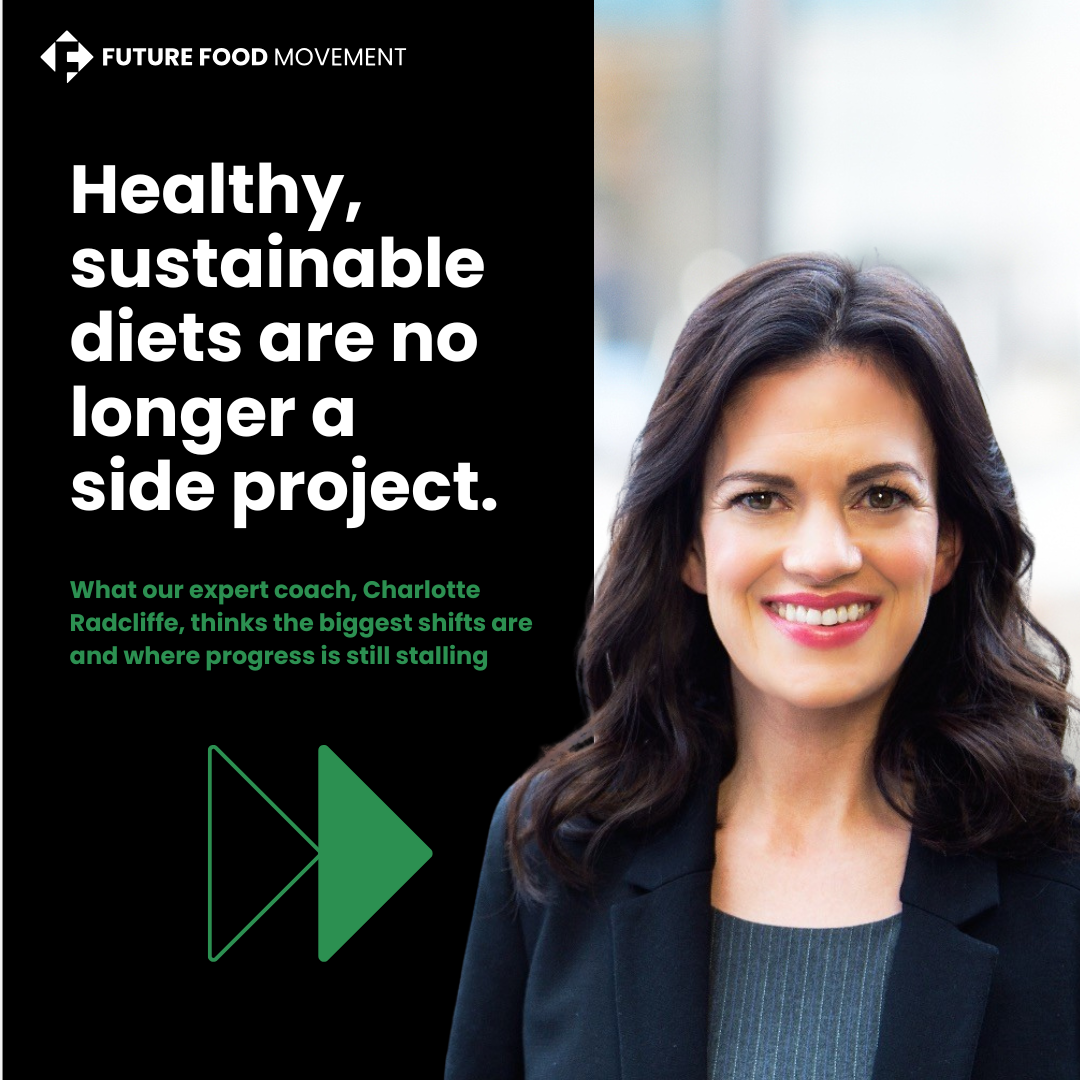
What happens when nutrition becomes a leadership issue, not a label?
Food businesses are making bolder commitments on nutrition and sustainability. It is moving into the heart of strategy, shaping product development, portfolio planning and long-term targets – but delivery is where the real pressure now sits.
Inside food businesses, we’re seeing reformulation and portfolio change become real priorities. But as Charlotte Radcliffe, our expert coach on sustainable nutrition, has been exploring through her work with Future Food Movement, there is a clear reality beneath the momentum: incremental change alone will not close the gap between today’s diets and what human and planetary health actually require.
Strategy, not slogans
One of the most significant shifts in the past year has been the move away from aspirational language towards concrete commitments. Businesses are setting measurable goals, from increasing the proportion of plant-based protein to reformulating entire ranges. The accelerating debate around ultra-processed foods has played a role here, with growing consumer concern driving greater transparency and a renewed focus on recognisable ingredients.
This marks an important step forward. Healthy and sustainable diets are no longer framed as a trade-off with commercial performance, but as a strategic lever for future resilience.
Where ambition still meets friction
Despite this progress, the gap between intent and execution remains wide. Reformulation is complex, resource-intensive and often costly. Balancing nutrition improvements with taste, affordability and operational realities is not straightforward, particularly across large portfolios and fragmented supply chains.
Even when better products exist, the wider food environment often works against them. Pricing, promotion, placement and availability still favour less healthy options, making it harder for consumers to choose differently. Portfolio change without environmental change limits impact.
“If healthier choices aren’t the easiest, most affordable option, the food environment hasn’t really changed.”– Charlotte Radcliffe, Future Food Movement Coach
Signs of momentum
What gives confidence is the appetite to tackle these challenges collectively. Consumer demand for nutritious, transparent food continues to grow, creating opportunity rather than just pressure. More businesses are recognising that no single organisation can shift diets alone, and collaboration is becoming a serious part of the conversation.
What leaders should focus on next
The starting point is honesty. Leaders need a clear view of their current portfolios, grounded in robust data on nutrition and sustainability. From there, specific, measurable targets matter more than broad commitments.
Progress also depends on making healthier choices genuinely desirable. Taste, convenience, price and visibility all play a role. Small, consistent improvements across many products can deliver significant impact when scaled.
The uncomfortable truth
Incremental progress is necessary, but it won’t be enough on its own. The current food environment is profitable and changing it requires difficult trade-offs. But delaying action carries far greater risks to public health, trust and long-term business resilience.
For organisations working through this challenge now, practical support is becoming critical.
Join Charlotte at our next drop-in clinic on health to hear how businesses are translating ambition into decisions across pricing, sourcing and product portfolios. She is also part of our Accelerator programme, working with teams to connect health, sustainability and customer expectations in a commercially viable way. Our Health, Sustainability and Diets work supports organisations ready to move from commitments to delivery.