
Food and beverage businesses hold vast amounts of information, but too often it is dispersed across systems, emails, messages and documents. Dan Mazig, Founder and CEO of Cerve, explains why connecting that data is essential for better decisions, sustainable growth and a more resilient food system.
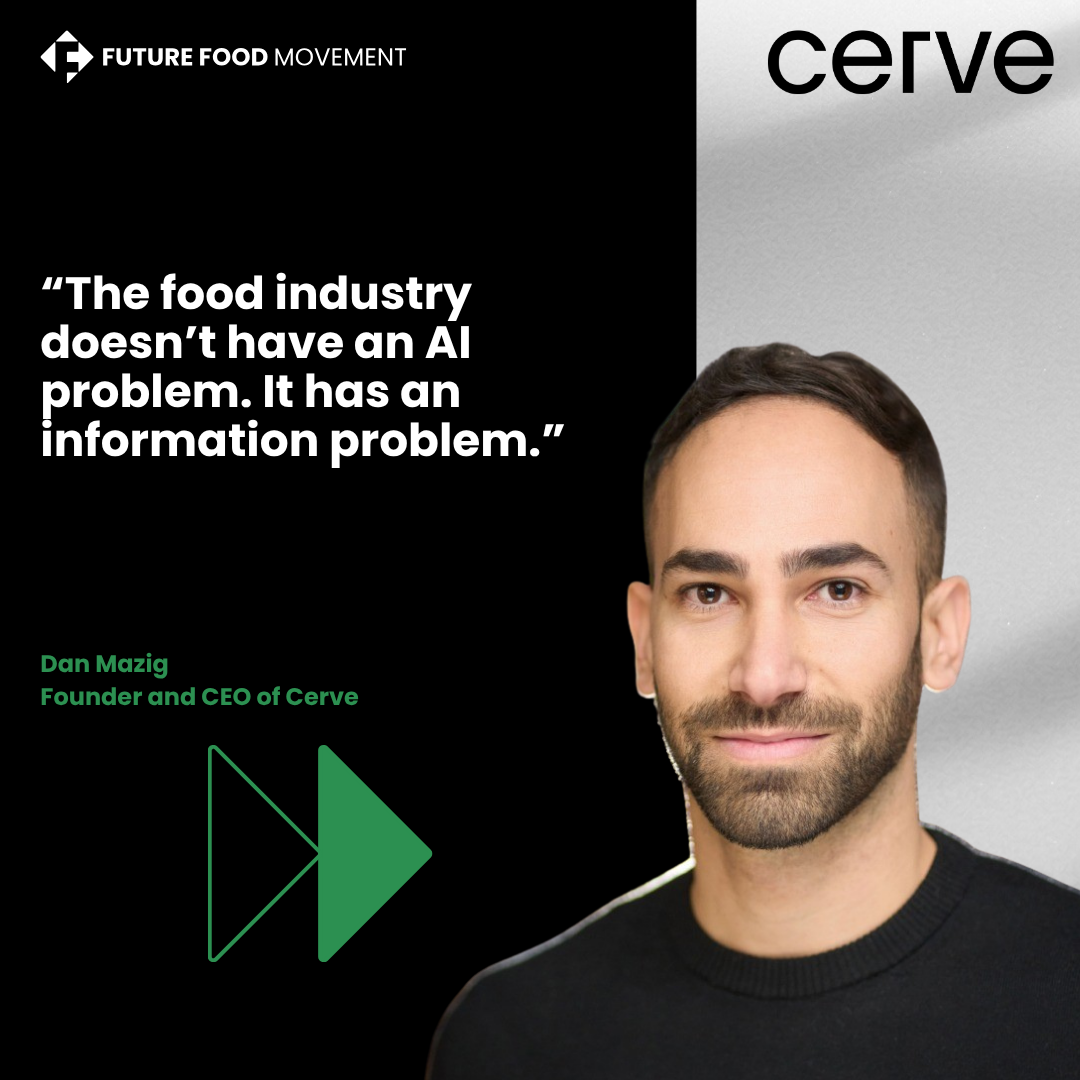
I started my career building products across different industries, working with Fortune 500 companies including Uber, Google and OpenText.
I was first introduced to the food industry in 2016 and have worked in it ever since. Over the years, I have built solutions for manufacturers, buying groups, wholesalers and retailers.
Across all of them, I kept finding the same root cause: operational problems could be traced back to fragmented data.
Food and beverage companies hold huge amounts of information, but it is often spread across different systems, emails, messages and documents. That fragmentation creates blind spots and misalignment. It makes it incredibly difficult for people to see the complete picture and make the right decision at the right time.
The consequences reach much further than inefficient processes.
Fragmented information affects the ability of businesses to protect profit, pursue growth and respond to increasing commercial and regulatory pressure. It also affects our collective ability to reduce waste, improve sustainability and strengthen food security.
From fragmented information to commercial insight
We can see this challenge throughout the food supply chain.
Commercial information from suppliers can arrive in different formats across emails, spreadsheets and documents. Bringing it together can be time-consuming, making it harder for teams to identify important changes and opportunities.
This is the challenge Cerve is helping Parfetts address as the employee-owned wholesaler pursues its ambition to reach £1 billion in turnover.
Through its partnership with Cerve, information covering supplier pricing, promotions, terms and product performance will be brought together to give the trading team a clearer view. The aim is to support faster, better-informed decisions and stronger supplier conversations.
At Woods Foodservice, important business information was similarly spread across systems, inboxes, spreadsheets and PDFs. Cerve connected those sources to support areas including stock replenishment, product specification validation, customer insight and invoice reconciliation.
Woods Foodservice reports saving more than 4,000 hours in the first 12 months, reducing administrative tasks by 55% and increasing operating profit by 77%.
These examples show what becomes possible when businesses can use the information they already hold more effectively.
Why I started Cerve
For decades, the problem of fragmented data was too messy to solve, so the industry learned to live with it.
That is no longer an option.
Commercial and regulatory pressure is rising, and companies need to act faster. The technology to make that possible finally exists.
I started Cerve to empower the supply chains that feed the world. We want to enable the food system to operate with greater visibility, so it can waste less and keep the world well fed.
We define Cerve as an operating system for food and beverage, supported by a service and consultancy approach that helps customers turn the technology into meaningful outcomes.
Working with Future Food Movement
Future Food Movement’s agenda around sustainability and health is closely aligned with Cerve’s ambitions.
Companies across the food industry are keen to do better, but I repeatedly hear that fragmented data is preventing progress. Through our strategic partnership with Future Food Movement, we want to engage with the people responsible for solving these challenges and contribute practical experience to conversations across compliance, procurement, sales, distribution, finance and operations.
The food industry already holds enormous amounts of valuable information. Connecting it can help companies make better decisions, unlock growth and contribute to a food system that wastes less and works better for everyone.
Join Future Food Movement and Cerve for the Making AI Work Clinic, a practical session for senior leaders exploring how to move from fragmented information and disconnected experimentation to stronger, faster business decisions.
Request a place at the Making AI Work Clinic
Dan Mazig is the Founder and CEO of Cerve, the operating system for food and beverage. Cerve combines technology with hands-on operational expertise to help businesses connect fragmented information, improve decision-making and achieve measurable commercial outcomes. Cerve is a strategic partner of Future Food Movement.