
I went into September with a notebook full of questions about the assumptions underpinning the food industry. What happens when the climate changes the commercial model? What happens when appetite changes? Would we make the same choices if we were building our businesses again today?
This autumn has been busy and taken me from conversations in Westminster to rooms with food-tech founders and investors, from some of the industry’s biggest businesses to fields and factory floors and into the worlds of television and advertising. A concern that dominates one conversation may barely register in the next, even when the people involved depend on one another.
Across those conversations, I have been thinking about how difficult it can be to act on what we already see. People understand that conditions are changing, yet the investment criteria and buying arrangements through which they make decisions can still assume a stability those same people would privately question.
I feel that tension myself. I run a business, and I know how quickly the immediate consumes the important. But I have also felt a growing impatience with how narrowly we sometimes allow ourselves to think about what could come next.
Who pays for resilience?
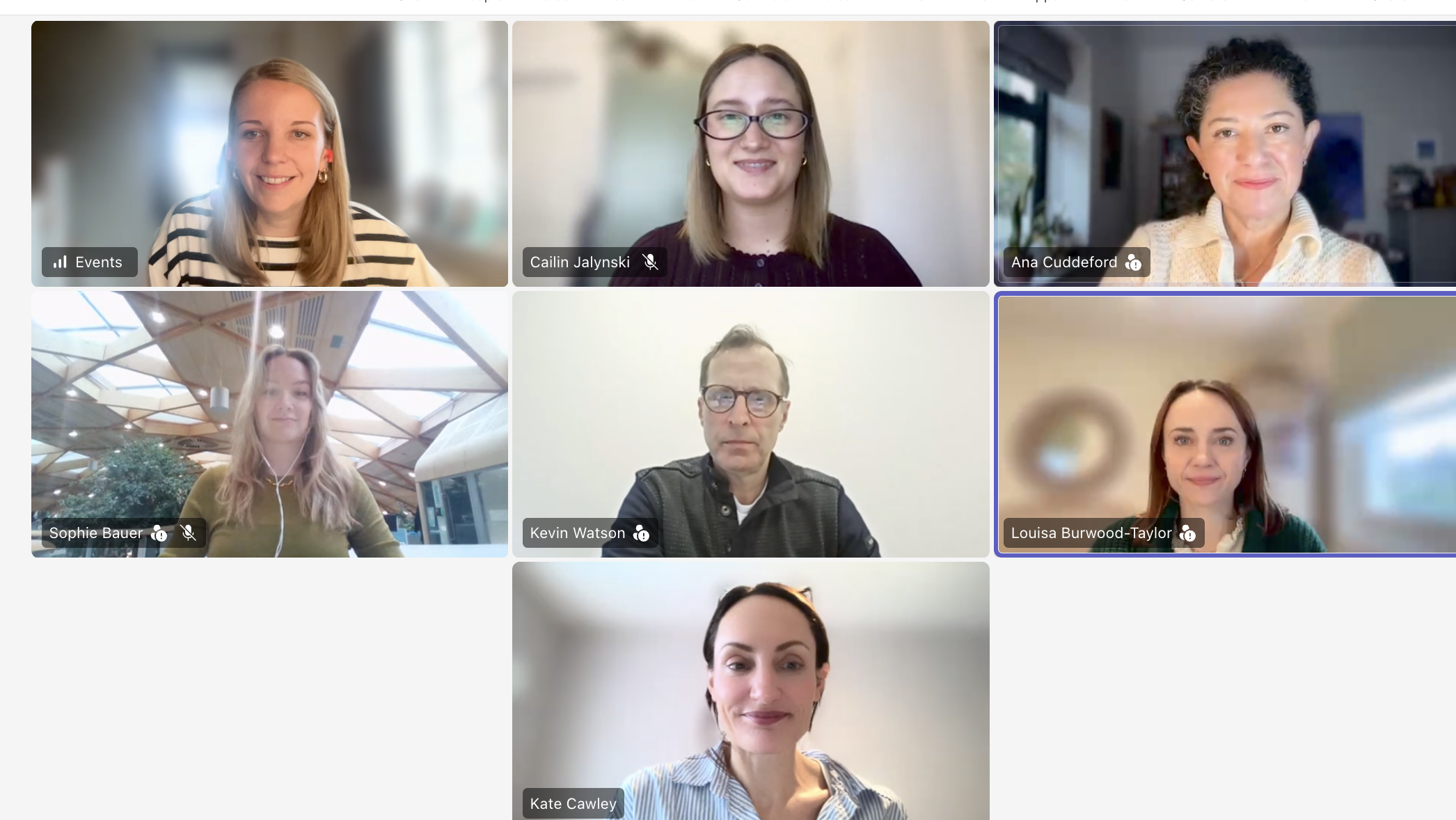
At our November conversation on the next risk horizon, out of a room of over 100 only three of the people answering said they had costed climate, nature and regulatory risks into their business. Around half said actual disruption would be the thing most likely to change their approach to risk.
It was a small snapshot from one room, but the relationship between those answers has stayed with me. If disruption is what finally earns a risk serious attention, consequential decisions will happen after our options have narrowed.
I think resilience struggles to make itself visible in the language through which investment is approved. The cost appears today; the value of avoiding a future problem is harder to demonstrate and a decision can look expensive against the current P&L while the exposure it would reduce remains outside the calculation.
Follow that conversation back to the farm and it becomes very tangible. A customer’s request may require investment extending well beyond its own buying commitment. We ask for adaptation while preserving arrangements that make adapting difficult.
If a business wants a farmer to make a longer-term decision, what is it prepared to commit to in return? Someone has to fund the capacity to withstand disruption. Risk passed to a supplier may eventually return as a supply problem, by which time the capacity to respond could be harder to rebuild.
These are some of the questions I want to bring into our screening of the National Emergency Briefing on 9 December. We’re bringing food leaders and their CEOs together, then hearing from farmers about what they can keep growing as conditions change and what they need from their customers. I want us to spend time on that relationship, because the decisions made at either end can look very different until you put them in the same conversation.
Different rooms are living in different futures
After exploring changing appetite and GLP-1s earlier in the autumn, I recently spent time with a wholesale team supplying hospitality and foodservice. Health and changing appetite did not appear to exert the same pull on that conversation that I had encountered elsewhere.
I found that useful because it complicated the story. Spend enough time in a particular set of rooms and it becomes easy to assume everyone is responding to the same forces with the same urgency.
A retailer, a restaurant group and a business supplying hospitals have different customers and different ways of recognising change. A signal may become commercially significant in one part of the system before it is visible in another; equally, enthusiasm within one network can get ahead of what is happening more widely.
The gap matters. Businesses can be preparing for different futures while relying on the same supply chains. One may be reconsidering its portfolio while another invests in capacity assuming demand will continue much as before. Understanding what customers and suppliers are seeing becomes part of understanding your own exposure.
Making room for imagination
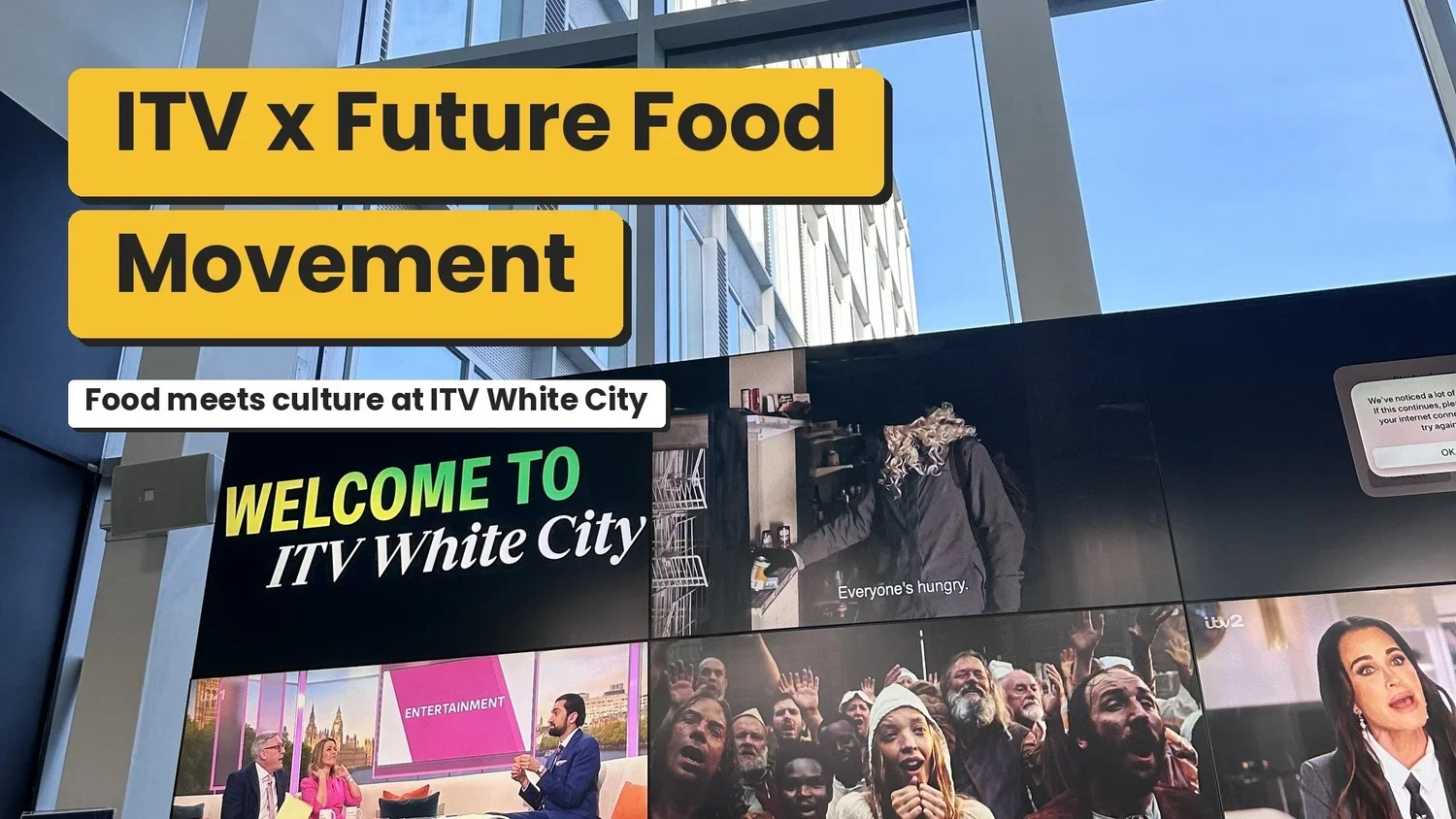
Our session with ITV brought another dimension into focus. Bringing farmers, food businesses and people working in television and advertising together made me think about how much food-system debate happens away from the places where people form their everyday relationship with food.
We discussed what people should eat and what they should pay, but food also lives in entertainment, family routines and the things we associate with pleasure. A healthier product needs to be something people want. A different way of farming needs a market that values what it produces.
I came away wanting more contact with people who understand how unfamiliar ideas become compelling.
Then I saw a post from the Business of Creativity describing Sir John Hegarty’s view of business as a creative act and the restlessness of people who can always see another possibility in what they have made.
I recognised that itch. It explains quite a lot about why I started Future Food Movement and why I keep bringing together people who might otherwise never meet.
I wish we made more room for that in food. There is extraordinary ingenuity in this industry, but conversations can be tightly bounded by what is immediately deliverable or will get through the next investment committee. We can become so practised at explaining why something is difficult that we leave little room to explore how it might be different.
Creativity belongs in conversations about contracts, investment and business models, just as it belongs in the products on a shelf.
What I am taking into 2027
Next year, I will be watching where these pressures meet: changing appetite and affordability, climate volatility and buying practices built around predictable supply. Those interactions may reveal more about the choices ahead than any single forecast.
I am ending this year clearer about why I do this work. Moving between these worlds keeps exposing things I would never see if I stayed in one and leaves me wanting to connect people who could do something with what the other knows.
That is feeding into a new concept we are developing for 2027. I am still working through its shape, but I know the conversations I want more of: where we can question something properly and get beyond the point at which someone says, “That’s just how the industry works.”
I understand the pressures behind that response. But I keep coming away thinking we have accepted some things too readily, and I want to spend more of next year finding out which of them we could change.

Explore previous Field Notes
Every month I connect the dots across leadership conversations, emerging signals and developments shaping the future of food.
Field Notes from the System #5 - September 2026
Field Notes from the System #4 - July 2026
Field Notes from the System #3 – June 2026